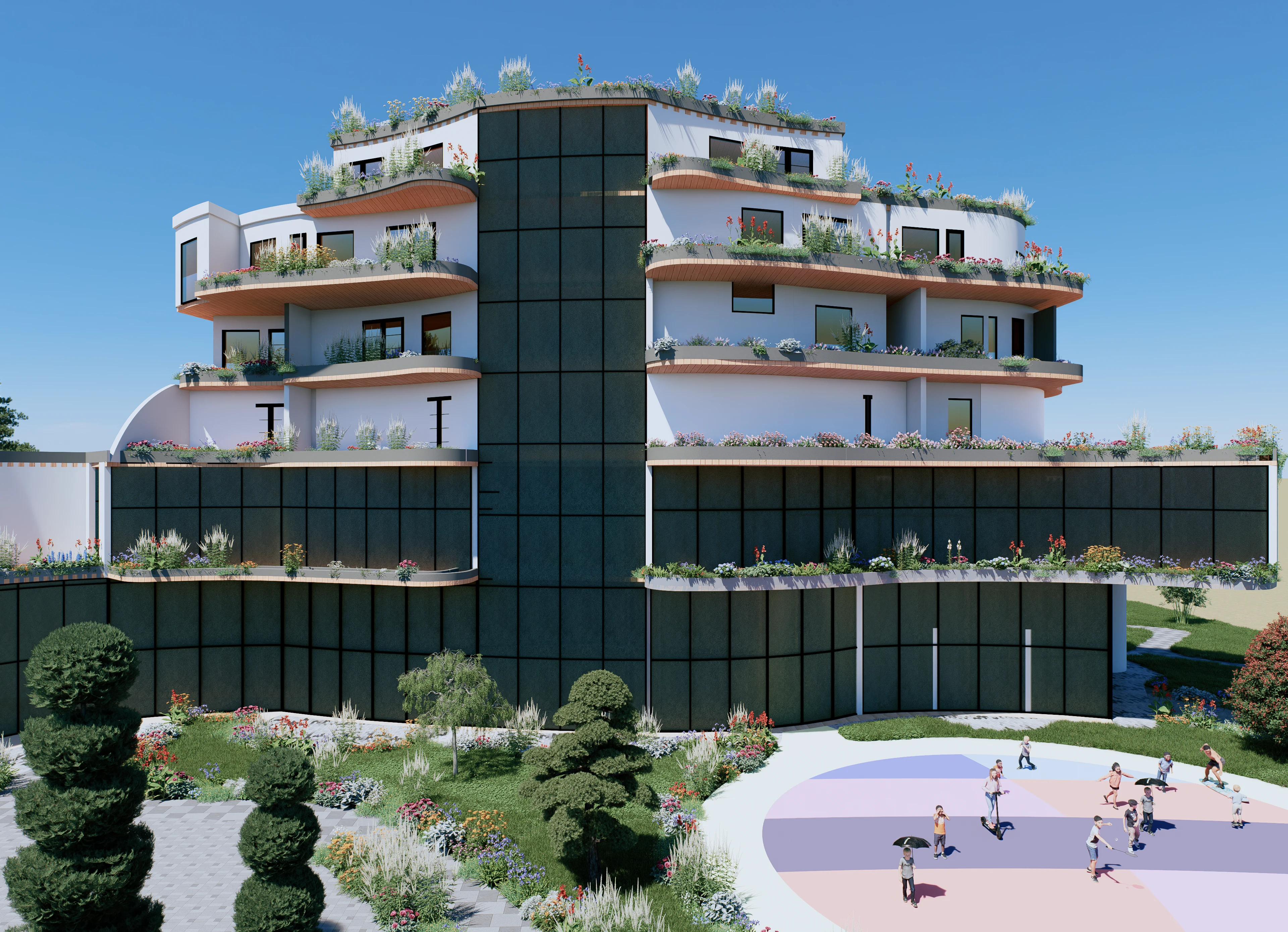
Integrating ecological design into a mixed-use building on a wetland site
Floor Area
1,300 m²
Residential Units
18
Commercial Area
320 m²
Green Roof
280 m²
Challenge
The site sits at the edge of one of Kigali's urban wetlands in Kacyiru, a condition that presents both constraint and opportunity. The wetland limits buildable area and requires careful management of surface water. It also means the building has direct access to one of the most ecologically and spatially interesting landscapes in the neighbourhood.
The brief was to develop a mixed-use building that could accommodate residential, commercial, and coworking uses without the different programmes conflicting. A secondary requirement, added early in the design process, was that the building pursue LEED or BREEAM certification. This raised the technical threshold but also clarified priorities.
Approach
The site analysis began at the scale of the wetland, not the plot. Understanding how water moves through the site in different seasons shaped the position of the building and the management strategy for surface runoff. The building footprint avoids the most sensitive ecological zones. The landscape between the building and the water is designed as a transition, planted with species native to the wetland edge that filter runoff before it reaches open water.
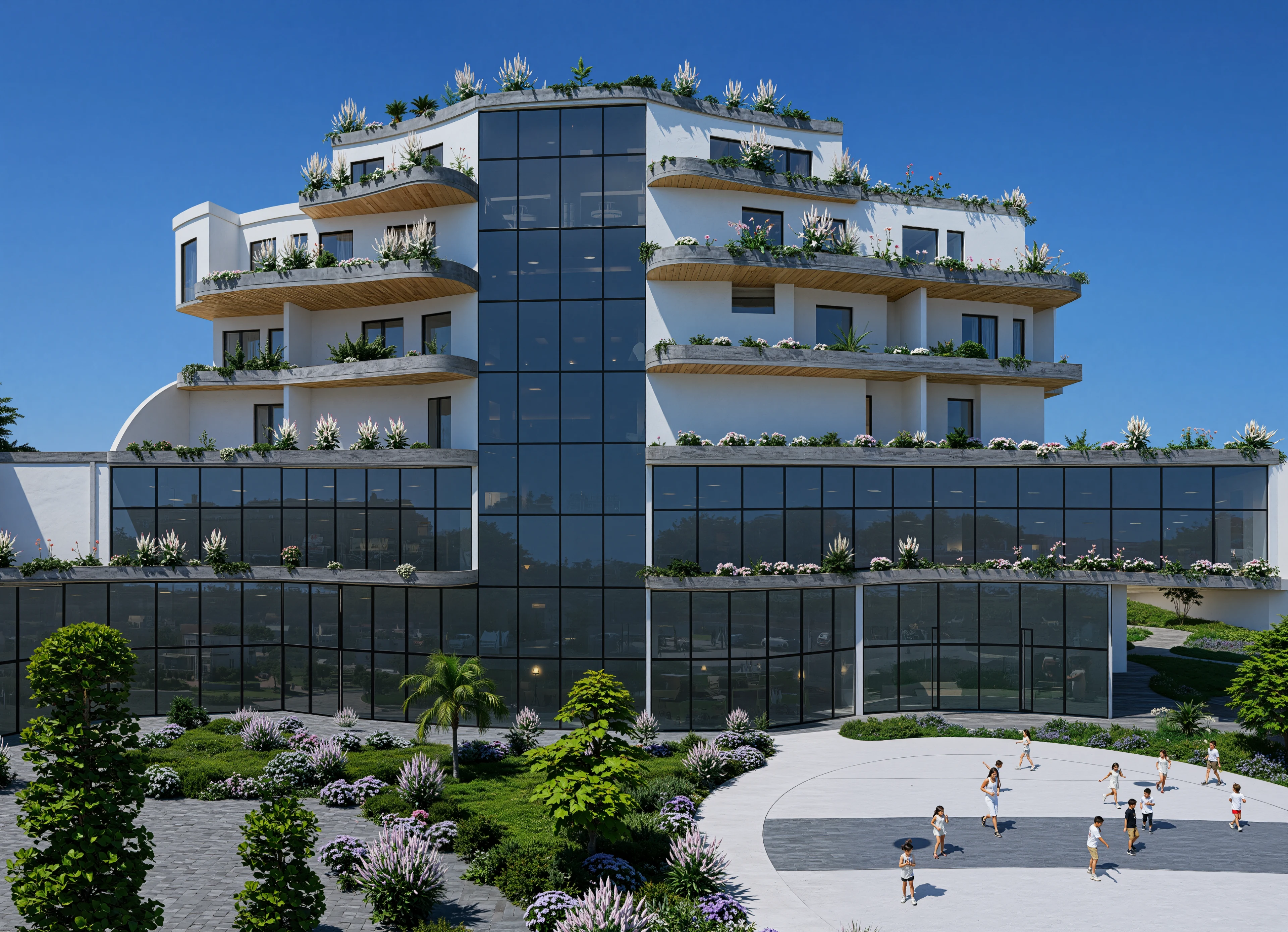
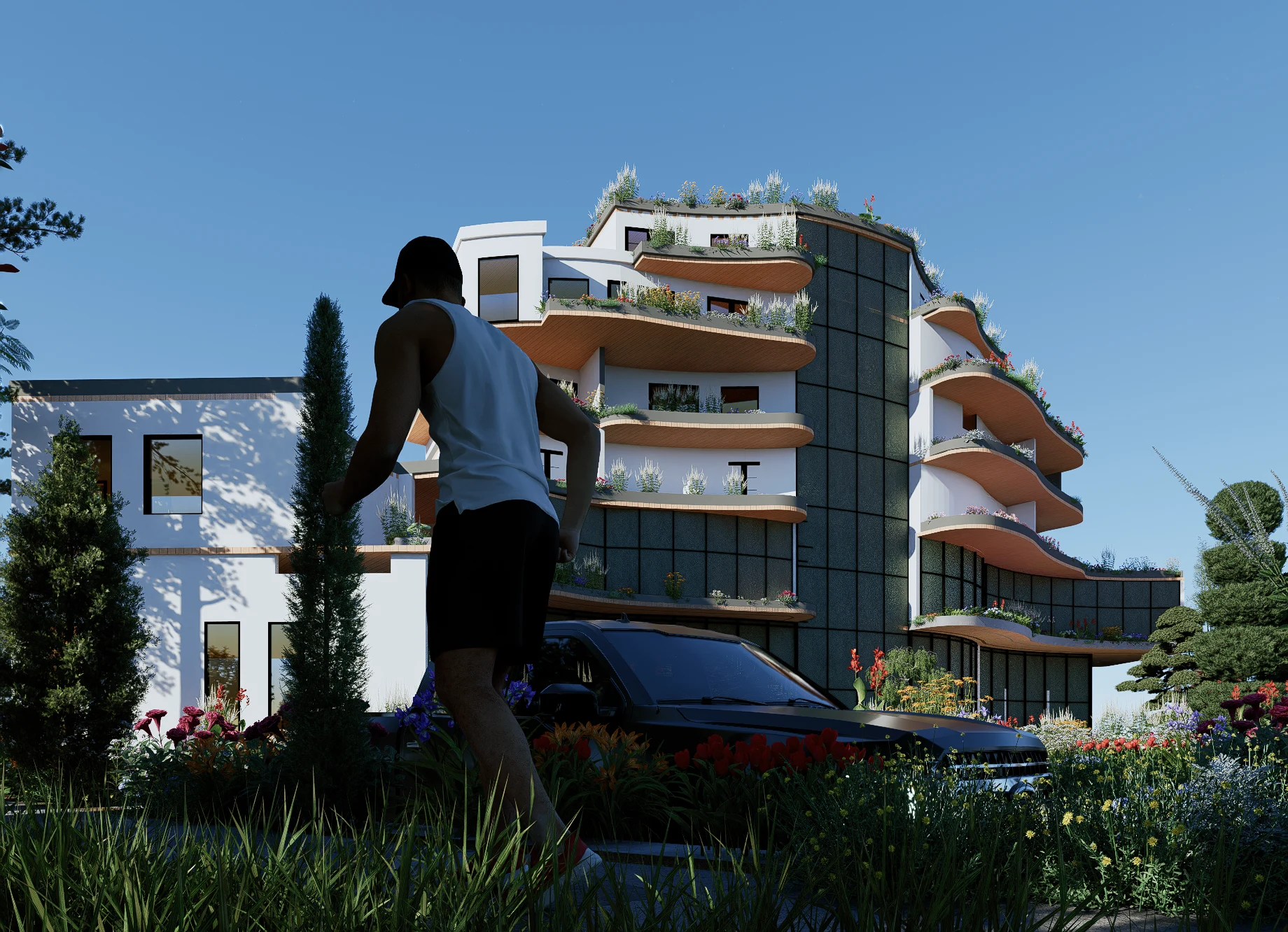
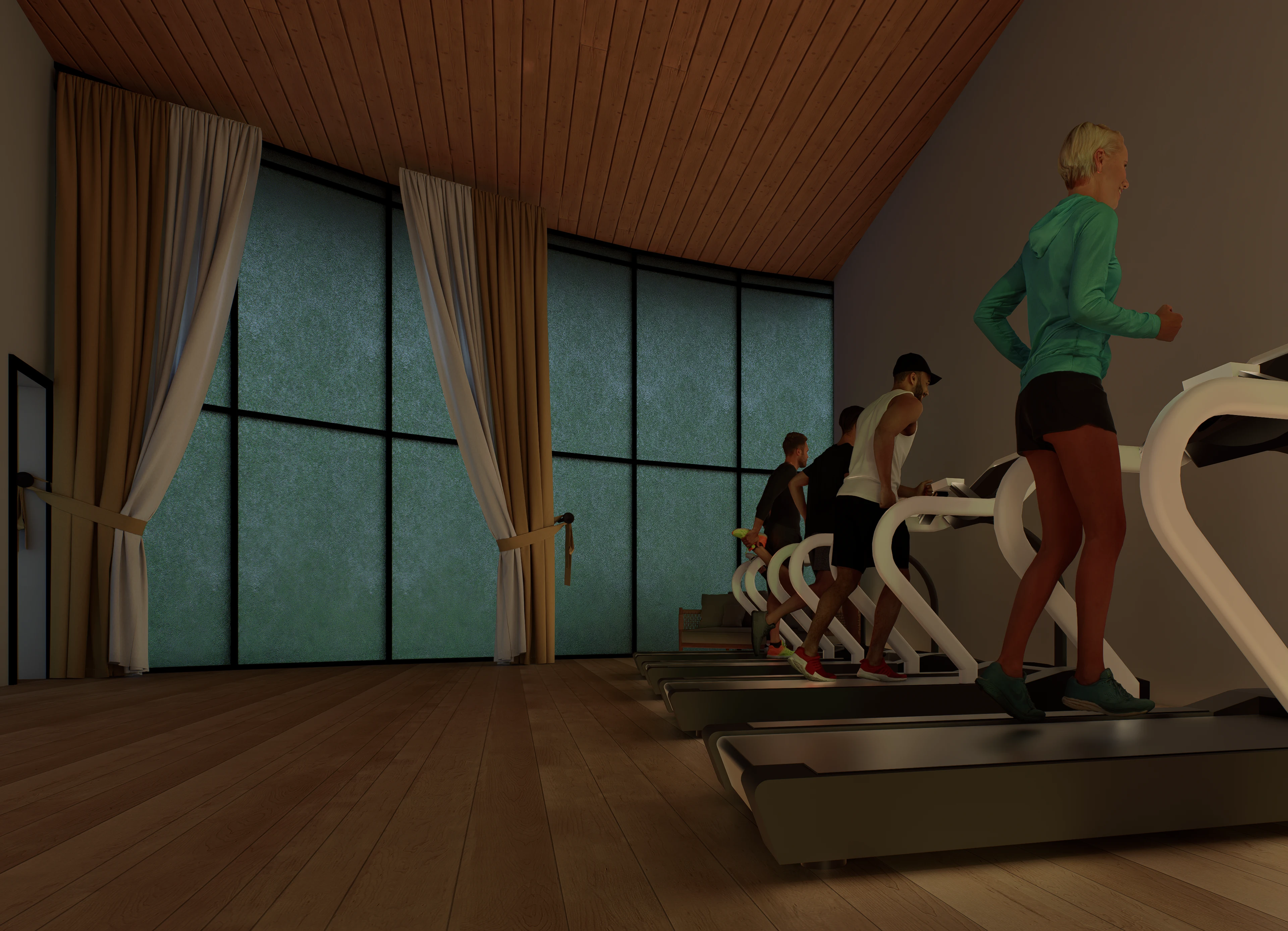
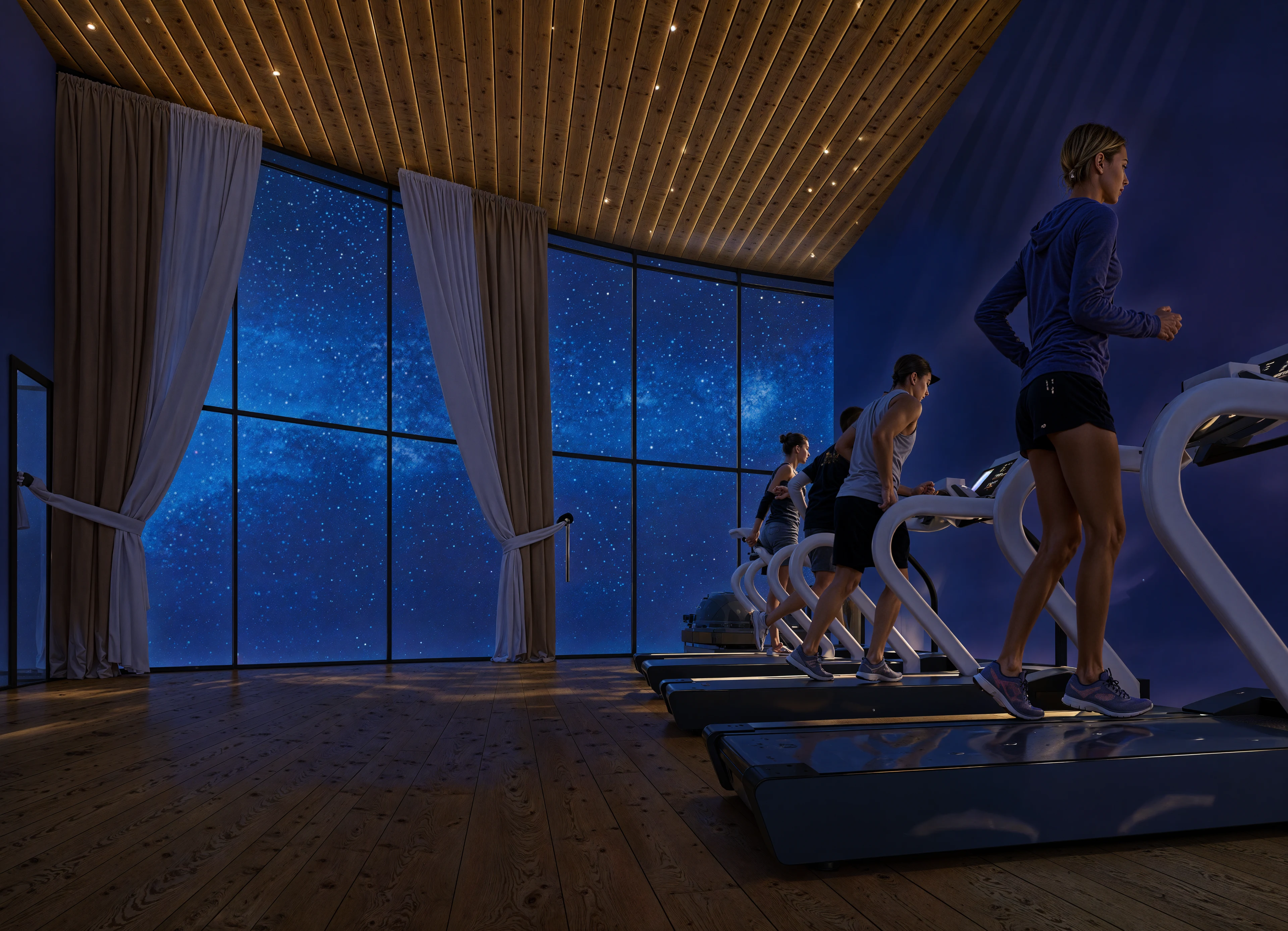
The building section organises uses vertically by their relationship to activity and noise. Commercial retail occupies the ground floor with direct access to the public realm. The gym is on the first floor with double-height volume and views out to the green roof. Coworking sits above, quieter, with controlled access. Residential units occupy the upper floors, with the most private spaces (the 3-bedroom units) at the top.
The green roof serves two functions: it insulates the building and it manages rainwater by holding the first 30mm of any rain event before releasing it slowly. Combined with the solar panels and the greywater recycling system, the building generates approximately 60% of its own energy and recycles 40% of its water consumption. These numbers are targets, not confirmed outcomes; the building is currently in construction.
Outcome
The building is currently on site. The structural frame is complete and the facade system is being installed. The green roof substrate and planting will go in during the final phase of construction. Practical completion is scheduled for Q3 2025. A monitoring strategy for energy and water performance is in place and will run for the first 24 months of occupation.
Next Case Study
Re-Housing Gatsata →